

Christmas and Thanksgiving cactus buds can fall after changes in temperature, light or moisture. Start by checking the location and potting mix, rather than adding fertilizer or repotting automatically. This guide covers these two holiday cacti and common retail hybrids, not the different flowering routine of Easter cactus.
One fallen bud is not an emergency. A plant carries more buds than it always opens, and an occasional loss is normal. When many buds shrivel or detach within a few days, look for a recent change before adding fertilizer or repotting.
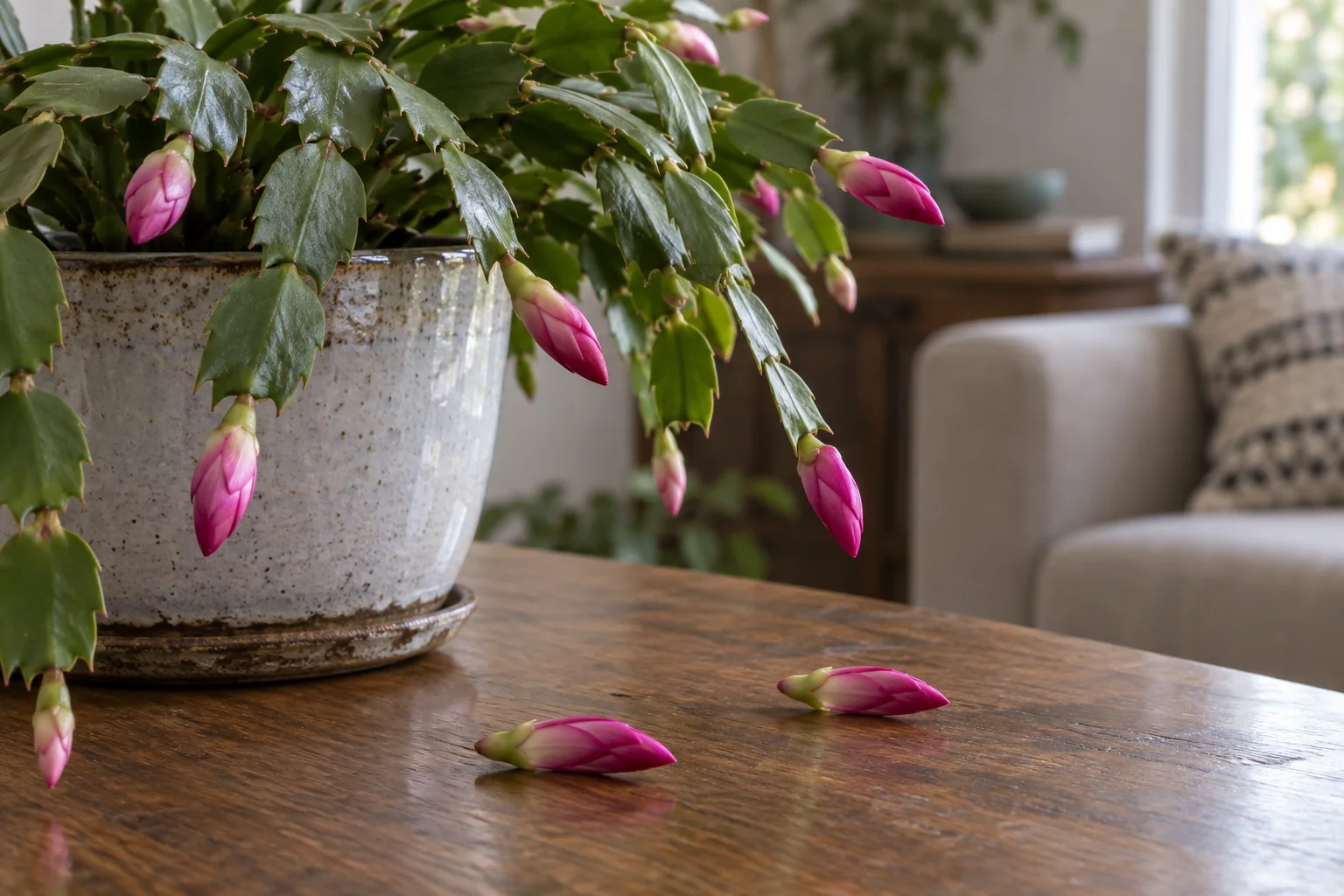
Ask what changed
Think back to changes since buds first appeared. As a practical starting point, review the last week or two: did you bring the plant home, move it for a party, turn on a nearby heat vent, let the pot dry completely, or water much more often? This is a memory aid, not a fixed delay between stress and bud drop.
Bud drop is often a response to the transition rather than evidence of a disease. A plant shipped from a greenhouse to a store and then carried through cold air into a heated home has experienced several changes in a short time.
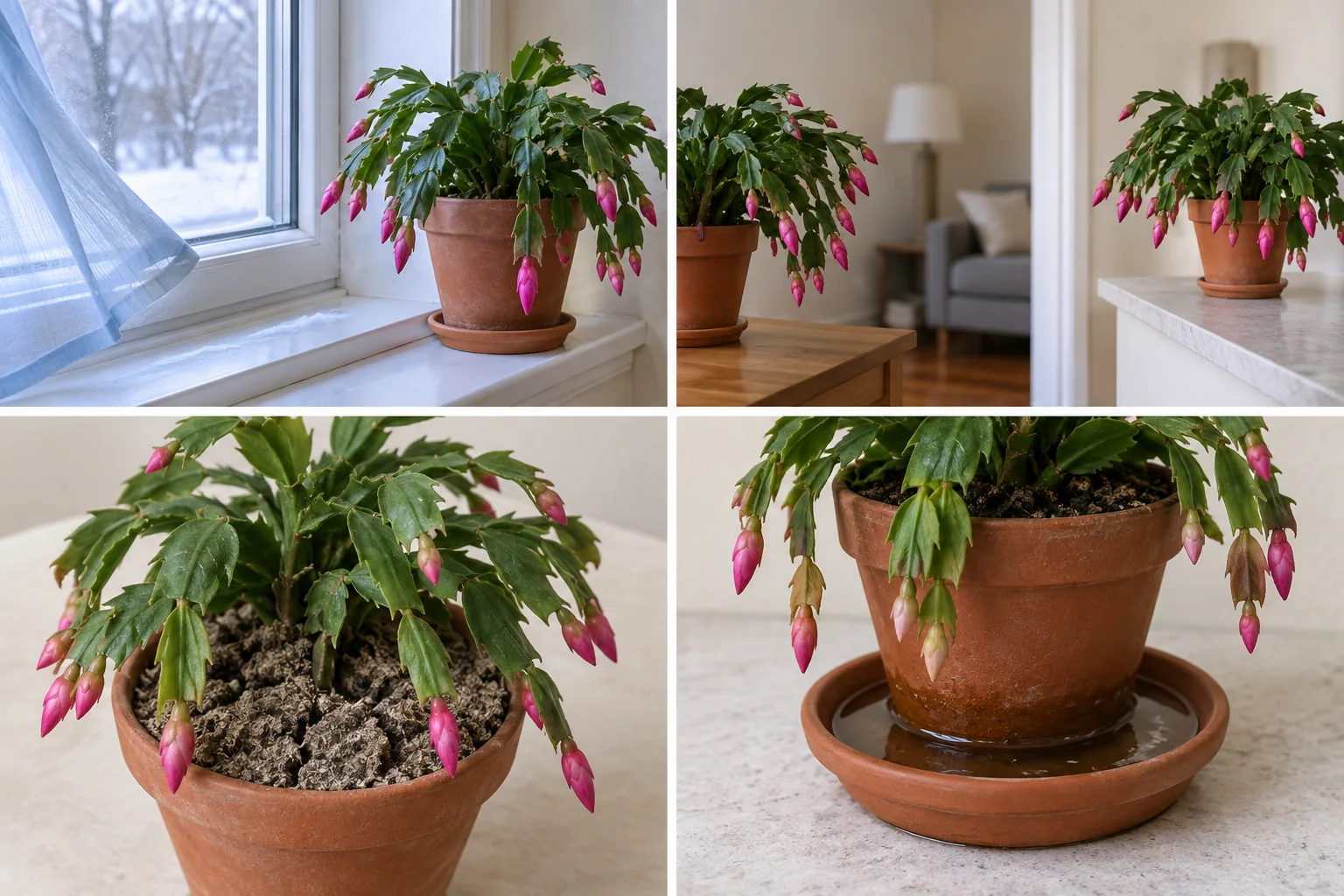
The most common causes
A sudden temperature swing
Holiday cacti set flowers in response to cool temperatures and long nights. Once buds are present, keep conditions reasonably steady. Protect the plant from cold glass, exterior-door drafts, fireplaces, radiators, and forced-air vents.
You do not need to chase an exact temperature every hour. The goal is to avoid abrupt extremes.
The potting mix became too dry
During budding and flowering, aim for lightly, evenly moist mix, not a saturated pot or a deeply dried root ball. Iowa State’s holiday-cactus guidance distinguishes this stage from the drier rest after flowering. Check the surface and just below it; water as the upper mix begins to dry, then let excess water drain. If much of the mix is already dry and the pot is unusually light, water now rather than waiting longer.
Do not compensate by leaving the pot in a saucer of water. A soaked root zone can also stress the plant.
The roots stayed wet
Decorative foil and cachepots often trap drainage water. Lift the nursery pot after watering and empty the outer container. If the mix stays saturated, check drainage and adjust watering now. Save nonurgent changes to the mix or pot size for after flowering; investigate promptly if wet wilting or a soft base develops.
The light changed sharply
Moving a plant from bright greenhouse light to a dim interior table reduces the energy available to finish its flowers. Put it in bright indirect light, but avoid repeatedly moving it in search of a perfect spot.
The plant was moved or rotated repeatedly
Holiday cacti can react to a new orientation while heavily budded. If the current location has suitable light and temperature, leave the plant there through flowering. Marking the window-facing side of the pot can help if you must move it briefly.
What to do today
- Choose one stable location with bright indirect light.
- Check moisture below the surface instead of watering on a fixed schedule.
- Empty any water caught inside foil, a saucer, or a decorative pot.
- Move the plant away from drafts and heat sources.
- Leave attached buds alone and remove fallen ones from the soil surface.
Do not repot a healthy, heavily budded plant just because several buds fell. Repotting changes moisture, root contact, and location all at once. Unless the plant is sitting in stagnant water or the roots are clearly rotting, wait until flowering has finished.
Will the remaining buds open?
Some remaining buds may continue to develop, but a snapshot cannot predict which will open. Watch for continued development and whether new buds keep falling after you correct a clear problem. Do not squeeze or tug buds to test them.
Bud loss alone does not establish a root disease. If the plant is also wilting while the mix stays wet or its base is soft, investigate the plant’s condition rather than treating the issue as only a flowering setback. Our plant-problem guides can help you separate observations from a diagnosis.
Help it rebloom next year
For Christmas and Thanksgiving cacti, shorter days and cool nights help initiate buds. Keep bright daytime light and avoid interrupting the dark period with room lamps. The University of Minnesota explains how light and temperature interact; there is no single countdown that guarantees a flowering date.
Once buds form, avoid unnecessary changes in a suitable location. The two stages are related but not identical: conditions that initiate buds and conditions that carry them through flowering deserve separate attention. Easter cactus needs a different induction routine.