

When a snake plant has filled its pot with roots, move it up just one pot size. For many small houseplant pots, that means roughly 1–2 inches more in diameter. First check that it actually needs the extra room. Tall leaves alone are not a reason to buy a much bigger planter.
The root ball is the mass of roots and mix inside the pot. That is what the new container needs to fit. A tall plant with a modest root system may need a heavier base rather than a larger volume of soil.
How to compare the old and new pots
The RHS repotting guide recommends modest increases for small containers. Treat the 1–2 inch range as a starting point, not a formula that applies to every plant or pot shape.
- Measure across the inside of the current pot, then compare the usable space in the new one. An advertised outside diameter can be misleading when the walls are thick.
- Check depth as well as width. Avoid a tall, narrow planter that adds a large column of unused mix beneath a shallow root ball.
- If you divided the plant or removed damaged roots, choose a pot for the remaining roots. You may need the same size or a smaller one.
For example, moving a well-rooted plant from a 6-inch pot to a similar-shaped 7- or 8-inch pot is a modest step. Moving it into a deep 12-inch decorative planter is a different proposition. Compare the actual root space before buying.
Does your snake plant need repotting yet?
University of Minnesota Extension recommends looking for tightly circling roots, roots emerging through drainage holes, and mix that dries unusually fast. Lift the plant out carefully to check rather than relying on the leaves alone.
A few roots at a drainage hole are a reason to inspect, not an automatic deadline. If there is still usable mix around the roots, the plant is growing normally, and watering is manageable, leave it alone. If the container is distorting or the root ball is densely packed, plan a repot rather than waiting for the pot to break.
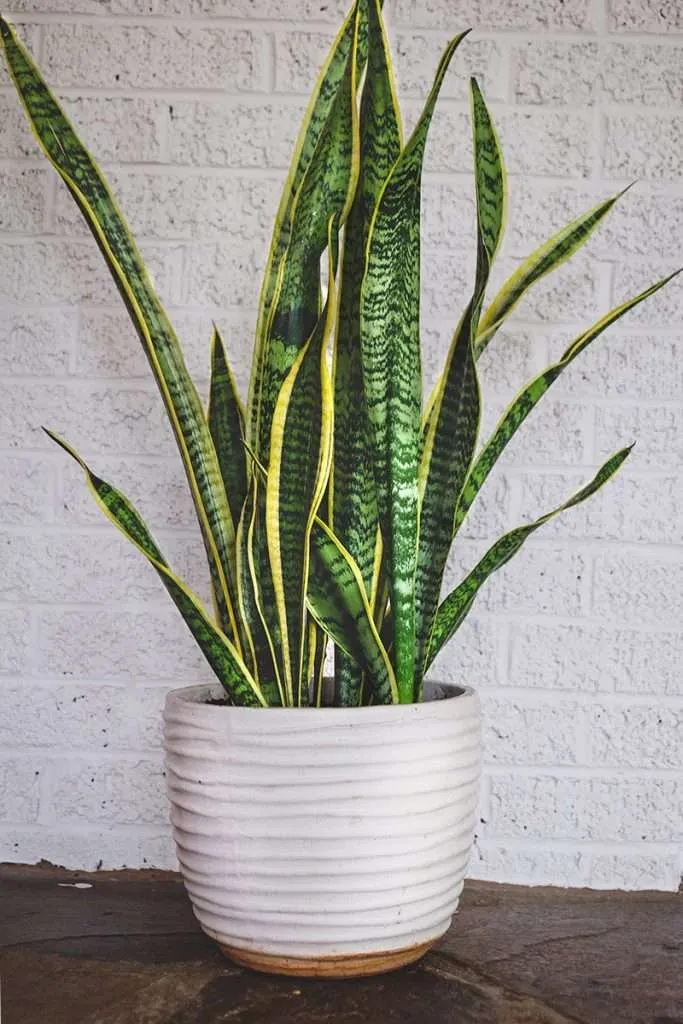
What if the plant keeps tipping over?
A heavier pot can help without a large increase in size. In its response to a leaning snake plant, Maryland Extension recommends a heavier ceramic or terracotta container and checking the light.
Another option is to keep the plant in a draining nursery pot inside a stable decorative cover pot. Lift it out for watering and empty collected water before putting it back. Do not bury the plant deeper simply to brace tall leaves.
Drainage matters more than the material
Use a container with drainage holes and a free-draining potting mix. The RHS snake-plant guide notes that these drought-tolerant plants dislike wet conditions. Extra soil around a small root system can stay wet longer, making watering harder to judge.
Terracotta and plastic can both be useful. Choose with your room and watering habits in mind. A pot material cannot compensate for a blocked drainage hole or water left standing in a cover pot.
After repotting
Keep the leaf bases at their previous soil level and leave space below the rim for watering. Check how the new mix dries instead of automatically returning to the old schedule. The new pot, mix, and any change in light can alter that timing.
If you are choosing a pot for another plant, see the separate Pilea repotting guide. The same habit of checking the roots helps, but the care needs are different.
Correction: clarified pot measurements and repotting checks, and removed unrelated health claims and the ambiguous root-ball percentage rule.
Great tips on pot sizing for snake plants! I never realized that going a size up can really help with their growth. Thanks for sharing such valuable information!
Great tips on choosing the right pot size for snake plants! I had no idea the pot depth mattered so much. I’ll definitely be considering drainage and the plant’s growth when repotting mine. Thanks for the insights!