

Check the potting mix and recent growing conditions before watering a brown aloe. Wet roots, a long dry spell, strong sun after a move, and cold exposure call for different responses. Leaf color alone cannot tell you which one is responsible.
Start with three observations: whether the mix is damp below the surface, whether the affected leaves are firm or soft, and what changed before the browning began. A photo of the whole plant is useful for tracking whether the damage is spreading.
Use these checks to narrow it down
| What you notice | What to check next |
|---|---|
| Brown leaves and mix that is still wet | Check drainage, trapped water, and the condition of the roots before adding more water. |
| Dry mix after a long gap between waterings | Confirm that the root ball is dry, then assess whether normal watering is due. |
| Browning after a move to a sunnier spot | Review the change in exposure; do not assume the plant needs extra water. |
| Damage after a cold night or contact with a cold window | Move the plant away from the cold and inspect the affected tissue. |
These checks help you investigate; they are not diagnoses. Several problems can occur together, and a photograph cannot tell you what is happening inside the pot.
If the pot stays wet
NC State Extension recommends very well-drained soil, drainage holes, and allowing the mix to dry between waterings. It identifies overwatering as a cause of root rot. A draining pot can still remain too wet if it sits in collected water or is watered too frequently.
- Empty any water from the saucer or decorative outer pot.
- Check that the drainage holes are open and assess moisture below the surface.
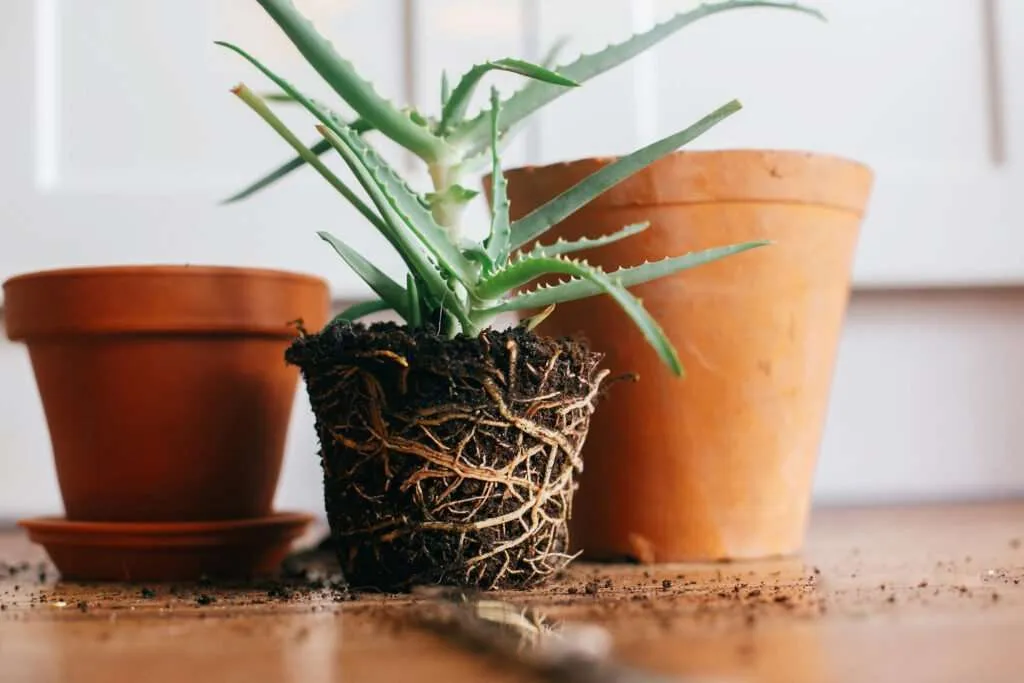
- If the plant is declining in persistently wet mix, gently remove the pot to inspect the roots. Soft, rotted roots need attention; do not automatically move the plant into a larger pot.
The RHS repotting guide recommends removing soft, rotted roots. If much of the root system or the plant base is affected, seek advice on whether it is salvageable. Repotting is not a guarantee of recovery.
If the mix is dry
The RHS aloe-care guidance recommends thorough but infrequent watering, letting the compost dry between waterings. Check the plant rather than following a permanent “every two weeks” rule.
When watering is due, wet the mix thoroughly and let excess drain. Do not keep topping it up with small amounts because a leaf still looks brown the next morning. Observe the plant and allow the mix to dry before deciding it needs another drink.
If the light or temperature changed
Think back to any recent move: a shaded shelf to a sunny window, indoors to a patio, or a position beside cold glass. The timing can be more informative than the precise shade of brown.
Aloe needs good light. NC State lists full sun to partial shade, while the RHS indoor guide cautions against harsh direct exposure. Those recommendations describe different growing situations. Avoid treating either “all direct sun is bad” or “the sunniest spot is always best” as a universal rule.
If the new exposure appears to be causing damage, reduce the harshest light while retaining a bright position. Change exposure gradually. Protect the plant from frost and cold drafts. Moving it does not, by itself, create a need for extra water.
What not to do to a brown aloe
- Do not repot every plant with a brown leaf. Inspect before disturbing the roots.
- Do not cut away all affected foliage to force a greener appearance. Remove fully dead material carefully when needed, without injuring the healthy plant.
- Do not add fertilizer, oils, or homemade remedies before identifying the problem.
If you suspect pests, use the identification-first approach in our houseplant treatment guide.
Judge progress by whether deterioration stops and healthy growth continues. Keep a dated photo and a short watering record. That gives you a better comparison than checking the same damaged leaf several times a day.
Editorial update: replaced blanket repotting advice and fixed watering schedules with practical checks, and removed promises that every brown plant will recover.
I have trimmed the leaves on the aloe vera plant that seemed quite dead and dried out, will the rest of the leave repair the cut and still live.
Okay i have ( or had a very large and thriving Aloe plant until I moved it and forgot to put it back. I lives in the conservatory and before we went away I watered everything. The aloe was moved from the corner onto the shelf at the front of the conservatory. I didnt really think it a big issure because we have nad rain and cloud cover of biblical proportions. Roll on four days, we return to find out the sun came out the very next day and stayed out! So the Aloe now has brown leaves/stems and Im wondering if its heading for the compost heap at the bottom of the garden? Has anyone done a recovery on something like this? Any advice would be greatly appreciated