

Bring summering houseplants indoors before nights become too cold for the species, then give them suitable light and a new watering routine. Around 50–55°F (10–13°C) is a useful general warning range for many tropical houseplants, not a universal damage threshold. Do not wait for frost.
This guide is for tropical foliage houseplants returning from a porch, patio, or balcony. It is not a winter-storage plan for dormant bulbs, hardy outdoor perennials, or every cactus. Identify the plant first; its own care requirements take priority.
Use the overnight forecast, not the calendar
Illinois Extension recommends moving houseplants in before temperatures fall below 55°F; Iowa State uses nights consistently near 50°F as the cue. University of Minnesota Extension notes that damage below 45–50°F depends on the species. These are broad planning guides, not competing guarantees.
For example, NC State recommends temperatures above 55°F for rubber plant (Ficus elastica). A plant with that requirement should come in earlier than a more cold-tolerant species. Check the forecast low and the plant’s minimum temperature before deciding to leave it outside another night.
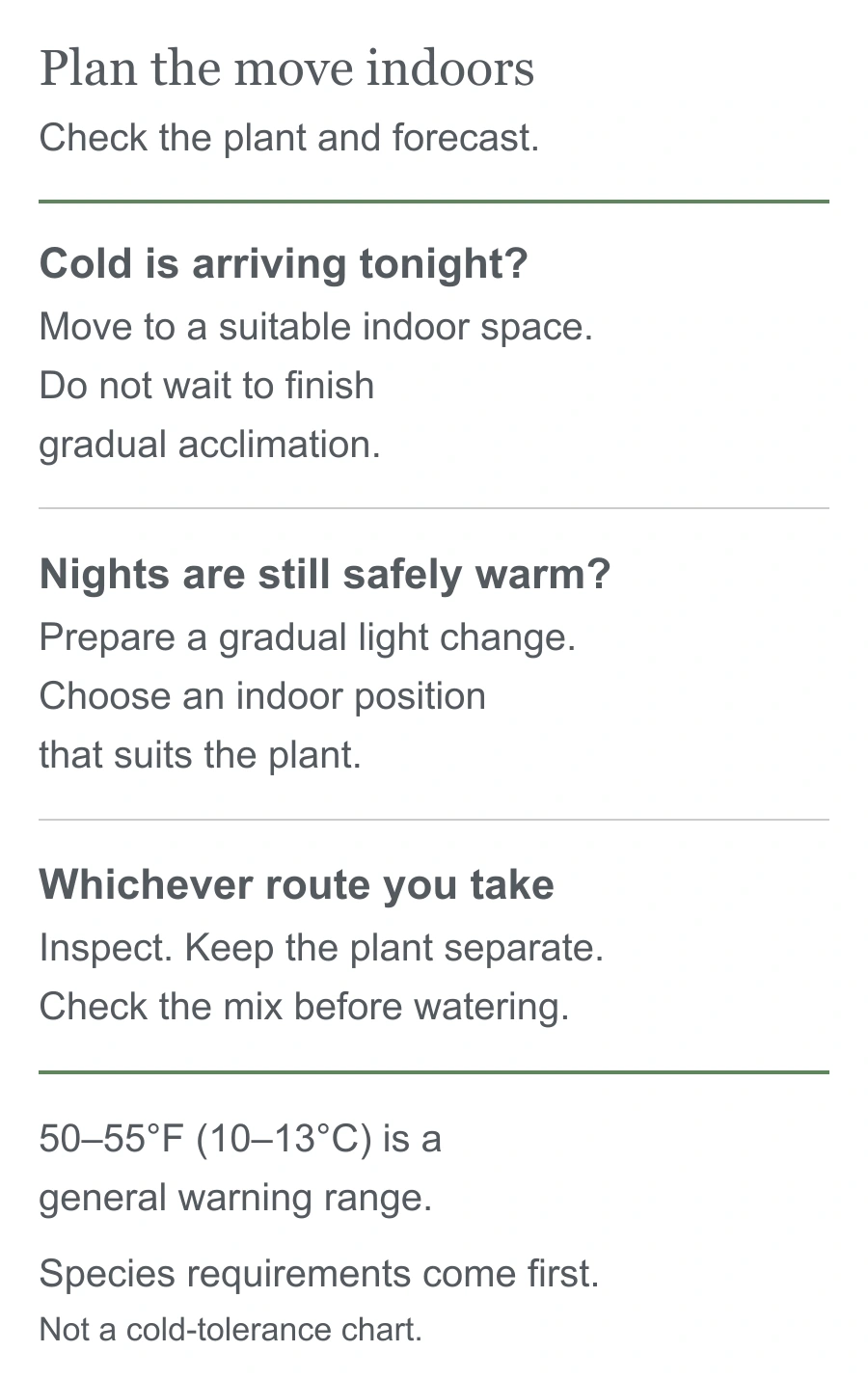
If cold is arriving tonight, move the plant to a suitable indoor space now. Do not leave it exposed merely to finish an acclimation routine. Gradual preparation is useful only while outdoor conditions remain safe.
If you have time, reduce the change in light
Illinois Extension describes gradually moving plants into more shade over about a week before the indoor move. That gives you a practical preparation window when the forecast allows it. Choose increasingly sheltered, shadier positions rather than repeatedly shifting the plant into strong sun.
Make a place indoors before carrying the pot in. Look at the actual light there during the day, including curtains, overhangs, and nearby buildings. A space that feels bright to you may offer little light to foliage tucked far from the window.
Iowa State’s houseplant-care guide explains that window direction alone cannot predict light: distance and obstructions matter too. Choose light appropriate to the species, keep leaves clear of cold glass, and avoid heating vents and cold doorway drafts. Do not put a shade-grown plant into harsh afternoon sun simply because it is indoors.
Inspect once outside, then keep observing inside
Before moving the pot, look under leaves, around leaf joints, along stems, and around the pot rim and drainage holes. Remove loose dead material and clean the outside of the container. A plain-water rinse can remove dust and some pests from foliage that tolerates washing; it does not prove the plant is pest-free.
Iowa State advises keeping returning plants apart for three to four weeks and inspecting often. Use a separate location with suitable growing conditions. If you find pests, identify and manage them before bringing the plant into the collection; reaching the end of a calendar interval is not evidence that an infestation is gone.
Avoid an automatic dish-detergent bath or precautionary homemade spray. Colorado State warns of plant injury from household soap treatments, and Maryland Extension distinguishes insecticidal soap from household detergents. If treatment is needed, follow a product label that covers the plant, pest, application, and location.
Reset watering instead of carrying summer’s schedule inside
Write down the move date, then check the potting mix before the next watering. Also lift the pot, if you can do so safely, to learn how its weight changes as it dries. Treat the old watering interval as something to reassess, not something to preserve.
Illinois Extension notes that plants commonly grow more slowly indoors and need less water and fertilizer. A pot that needed frequent watering outdoors may remain moist longer inside. How much longer depends on the plant, mix, pot, light, and room conditions; there is no reliable rule to water every plant half as often.
- Check moisture against the needs of that species. Do not require a fern and a succulent to reach the same dryness.
- When water is needed, wet the mix thoroughly and let excess water escape through the drainage holes.
- Check the saucer or decorative outer pot afterward and remove collected water.
- Recheck before watering again, even if the old outdoor watering day has arrived.
These checks follow Iowa State’s guidance to assess moisture rather than water on a fixed schedule. Reduce or pause fertilizer as growth slows. Do not feed simply to compensate for a darker position.
Watch the trend after the move
Iowa State notes that leaf drop can accompany the adjustment indoors, sometimes over one to two months. That is context, not a reason to ignore a worsening plant. For rubber plants, NC State also lists excess watering and cold drafts among causes of leaf loss, so a fallen leaf cannot identify the cause by itself.
- A few leaves fall, but stems remain firm: check light, moisture, and drafts, then keep conditions consistent and record whether leaf loss slows.
- Wilting while the mix is wet: check for standing water and drainage problems before adding more water. Do not assume every wilt means thirst. See Iowa State’s explanation of wet and dry wilt.
- New webbing, sticky residue, or visible insects: keep the plant separate and investigate pests rather than attributing everything to the move.
Photograph the whole plant and any changing areas in similar light. Note watering dates and what the mix felt like. Those observations are more useful for troubleshooting than a daily total of fallen leaves alone. If decline continues or you cannot identify a pest, take the record to your local extension service.
For species-specific care, use our free plant guides. If a symptom needs closer investigation, start with the plant problems directory.